Christian Moral Action
This topic is all about Dietrich Bonhoeffer, a Lutheran pastor who had a neo-orthodox interpretation of the Bible.
Questions you should be able to answer by the end:
-
whether or not Christians should practise civil disobedience
-
whether or not it is possible always to know God’s will
-
whether or not Bonhoeffer puts too much emphasis on suffering
-
whether or not Bonhoeffer’s theology has relevance today
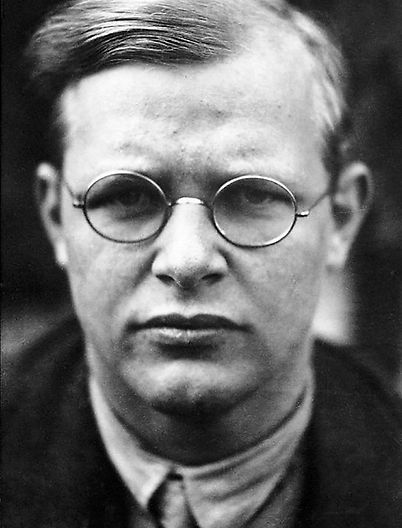
Dietrich Bonhoeffer Biography
-
Bonhoeffer was a Lutheran Pastor and neo-orthodox theologian (more in line with Protestantism); this means that he had a tendency to be critical of the Church, if he felt it diverged from the Bible.
-
Bonhoeffer lived in Germany under Nazi rule, he staunchly opposed it. He was vocally against the persecution of Jewish people.
-
After completing his Doctorate in Theology, Bonhoeffer moved to America in 1930 and integrated himself into the American Baptist Church in Harlem.
-
It was during his time in America that Bonhoeffer became aware and sympathetic to the social injustices experienced by minorities.
-
He returned to Germany in 1931, becoming a lecturer at the University of Berlin.
-
His resistance to Nazi rule began almost immediately after their ascension to power - with Bonhoeffer delivering a radio speech attacking Hitler just two days becoming Chancellor.
-
Bonhoeffer established the Bekennende Kirche (Confessing Church), which adopted The Barmen Declaration written by Karl Barth. This declared that it was Christ, not the Fuhrer, who was the head of the church.
-
He was assassinated in 1945 for partaking in a plot to execute Hitler.
Can we know God's Will?
-
Being a Lutheran pastor, Bonhoeffer was part of a denomination of Christianity that believed that the fall corrupted humanity's ability to have knowledge of good and evil.
"Humankind now lives truly out of the resources of its own good and evil, its own innermost dividedness from itself"
-
Bonhoeffer further states that humanity is in a time of turmoil, not knowing who to listen to, who to turn to or how to act: morality and the creation of the universe by God is "totally ineffable, inexpressibly dark beyond of our own
blind existence"
-
What we should aim to do is be a responsible person, standing our ground against what we think is evil and have faith that we do so in God's will.
-
As we cannot know God's will, the best that we can do is pray and meditate on the Bible and hope that we get it right. If we do not, then we must ask for God's forgiveness
-
This is demonstrated in Bonhoeffer's involvement in a plot to assassinate Hitler. Clearly we would think that violence is always wrong, but maybe that's because we don't understand God's will and doing nothing under an evil regime is just as evil as the regime itself.
-
There are two ways in which we can criticise this:
1. The Bible has clear rules against violence: "If anyone slaps you on the right cheek, turn to them the other cheek also" (Matthew 5:38)
2. We CAN know God's Will. Think about Catholic Ethics such as Natural Law Theory. Aquinas states that God's moral law is built into nature and we can use our reason to deduce this and work out the primary precepts - a system of rules. The first of which is "sustain life".
-
We can come back at this with Bonhoeffer again who states that the Bible is not supposed to be a legalistic rule book, nor the perfect word of God. Rather, meditating on the Bible within a community setting can create an encounter with Jesus in which we know what is right and wrong.
"“The will of God is not a system of rules which is established from the outset".


Civil Disobedience
-
Christians should obey their state's laws. We are sinful because of the fall and therefore laws are useful to keep us in line.
-
However, it is humans themselves that made these laws and they are therefore fallible. Governments can become corrupted.
-
Therefore, a Christian's allegiance is owed to God first and foremost.
-
If a state's laws seem to be acting against the interest of God's will, it is a Christian's duty to disobey them and partake in civil disobedience.
-
Bonhoeffer did this. He ran illegal seminaries and partook in a plot to assassinate Hitler.
-
This however seems dangerous. Bonhoeffer's ethics could be used to justify extreme violence and then we could simply ask for God's forgiveness afterwards.
1. George Bush cited Bonhoeffer as justification for the war on terror.
2. Paul Hill bombed an abortion clinic, also citing Bonhoeffer as inspiration.
3. Eric Metaxas, a trump supporter, conspiracy theorist and conservative radio host has repeatedly referenced Bonhoeffer (even writing about him in a book) as a means of: questioning the Covid vaccine, promoting awareness of election fraud against Trump.
-
These instances, however, do not discredit Bonhoeffer's theology. Using Bonhoeffer to justify selfish ends goes against the very ethics Bonhoeffer taught about. In order to truly act in God's will, we must surrender our own will and act selflessly, which none of the above examples have done.
Solidarity
-
One thing about Bonhoeffer's theology that OCR can ask you about is the idea of Solidarity.
-
This means the idea that a good Christian life should be about living with and for other people.
-
There is a strong community aspect to Bonhoeffer's ethics - running the confessing church, secret seminaries for others and also the idea of solidarity was the whole reason he returned to Germany despite living in America.
-
"The incarnate one transforms his disciples into brothers and sisters of all human beings."
-
A core theme throughout the Bible was Jesus' showing of solidarity to the oppressed and vulnerable. Thus we should seek to mirror that within our own lives.
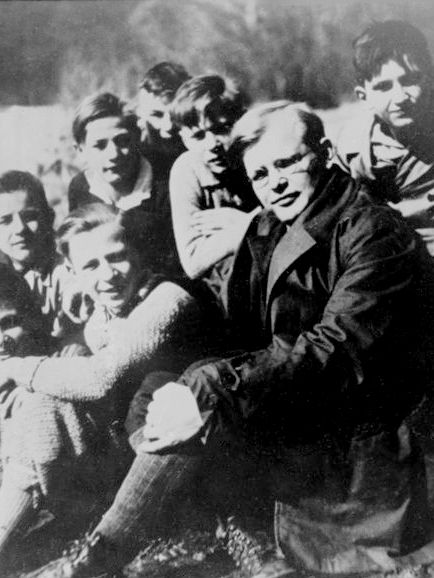
_JPG.jpg)
Memorial to Bonhoeffer; St. Peter's Church, Hamburg
Cheap vs Costly Grace
-
Part of being a good Christian means suffering with others as Jesus did.
-
True salvation requires "costly grace" and it involves suffering and sacrifice.
-
The Church, Bonhoeffer believed, promotes "cheap grace" which is not doing anything hard to achieve salvation. For example, Catholicism promotes confession in which you receive salvation just by confessing sins.
-
"It is costly because it costs a man his life, and it is grace because it gives a man the only true life. It is costly because it condemns sin, and grace because it justifies the sinner. Above all, it is costly because it cost God the life of his Son".
-
However we can ask whether this is still relevant today? Bonhoeffer's ethics are contextually important, meaning that "costly grace" and suffering were easier to achieve given that he was resisting Nazi rule. We are in a time of relative peace and so there is not much we can do to truly suffer and sacrifice.
-
We can push back on this. There are always sacrifices to be made and there are still injustices to fight against. Part of the reason for Bonhoeffer's teaching on solidarity came from his time witnessing prejudice and discrimination in Harlem. Racism, and sexism still exist today so there are still battles to be fought.
The Western Void
-
Starting from the Fin de Siècle in the 1880s, the impact of religion in every day life has gradually dwindled leading to a crisis in Philosophy.
-
Community centered morals found in religion seemed to make way for more personal philosophy.
-
This impacts Bonhoeffer's teaching as it criticises its relevance, especially in terms of solidarity and communal ethics.
-
Oscar Wilde wrote in An Ideal Husband: "Optimism or pessimism...they seem to be the only two fashionable religions left nowadays." (1893).
-
Most famously, Friedrich Nietzsche wrote about the death of God in 1882, meaning that there has been a collapse in traditional values and the rejection of religious ethics. Nietzsche did not criticise this "void" as a negative thing. It is to lead to the creation of your own values, separating yourself from the herd, moving past religion entirely.
-
Bonhoeffer and Nietzsche have their parallels and, clearly, their differences. While Nietzsche wants to move past religion entirely, Bonhoeffer wants to reinterpret it into a more modern context. However, their ideas do actually collide at certain points.
-
Nietzsche introduced the idea of the Übermensch in Thus Spoke Zarathustra. This is a man who opposes an egalitarian system and rises to become a man of their own values. This is an individualistic quest in which man generates meaning entirely from themselves. This diverges from the communal aspect of Bonhoeffer's ethics.
-
Weakness as in the lack of courage and contentedness in becoming a victim, for both, is contemptible. However where they diverge is that Bonhoeffer believes in a second kind of weakness due to poor luck. It is those that should be helped.
-
Nietzsche argued that "in truth, there was only one Christian, and he died on the cross". Here, Bonhoeffer would kind of agree, though only in a more constructive and less attacking manner. Christians should seek to mirror Jesus' life rather than living for Hinterweltler (a term coined by Nietzsche that Bonhoeffer himself used meaning "the other world" or "heaven").
-
Bonhoeffer's neo-orthodox interpretation of Christian faith was labelled by himself as "non religious".

Nietzsche, one of my favourite philosophers.
Extra Resources
Here are some extra resources for this topic. Things like essay plans for A* answers. They are paid for, sorry! They're £2 each because they take me a really long time to make :)
![[OCR] Christian Moral Action - Solidarity - Essay Plan](https://static.wixstatic.com/media/fa6229_31867fa861e24a89bddca45949905342~mv2.png/v1/fill/w_171,h_264,al_c,usm_0.66_1.00_0.01/fa6229_31867fa861e24a89bddca45949905342~mv2.png)
![[OCR] Civil Disobedience Essay Plan](https://static.wixstatic.com/media/fa6229_31867fa861e24a89bddca45949905342~mv2.png/v1/fill/w_160,h_247,al_c,usm_0.66_1.00_0.01/fa6229_31867fa861e24a89bddca45949905342~mv2.png)